A Fixed-Rate Mortgage Locks In Your Payment — It Doesn't Lock In Your Financial Future
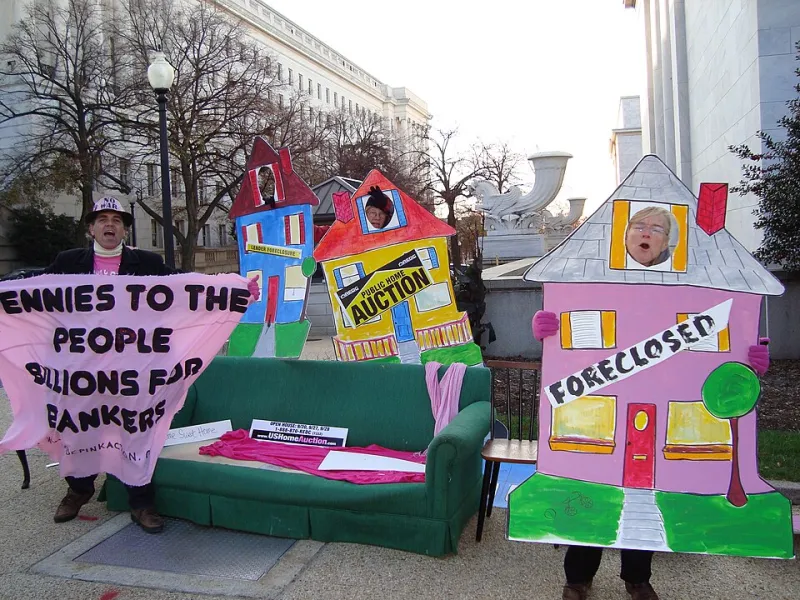
Photo: CODEPINK Women For Peace, CC BY-SA 2.0, via Wikimedia Commons
A Fixed-Rate Mortgage Locks In Your Payment — It Doesn't Lock In Your Financial Future
There's a moment at the closing table that feels genuinely satisfying. You've locked in your rate. The number is frozen. Whatever the Federal Reserve does next year, whatever happens to inflation, your principal and interest payment stays exactly the same for the next 30 years. It feels like winning.
And in one specific, real, important way — it is. But that feeling of total protection tends to expand well beyond what a fixed rate actually delivers. The mortgage industry, the media, and well-meaning family members have collectively sold the fixed-rate loan as a kind of complete financial shield. The real story is more interesting than that.
What a Fixed Rate Actually Does
Let's start with what's genuinely true. A fixed-rate mortgage eliminates one specific and significant risk: payment shock from rising interest rates. If you locked in at 6.5% in 2023 and rates climb to 9% by 2027, your payment doesn't budge. That's real protection, and it's not nothing. Adjustable-rate mortgage holders in the mid-2000s learned that lesson painfully when their payments reset and their budgets collapsed.
A fixed rate also makes long-term budgeting easier. You know your housing cost. You can plan around it. For households with steady incomes and a preference for predictability, that consistency has genuine value.
So the tool works. The problem isn't the mortgage — it's the story people tell themselves about what the mortgage is doing.
The Chapter Most Buyers Skip: Inflation Works Against You Too
Here's the part that rarely makes it into the celebratory "we got a great rate" conversation: inflation doesn't just threaten people with variable-rate debt. It quietly erodes the purchasing power of everyone, including fixed-rate homeowners.
When you lock in a payment of $2,400 a month, that number feels stable. But your property taxes, homeowner's insurance, HOA fees, and maintenance costs are all subject to inflation. In many parts of the country, those line items have risen faster than general inflation over the past decade. Your mortgage payment held steady while the total cost of owning your home climbed.
There's also the flip side of inflation that rarely gets discussed in the context of fixed-rate loans: if you locked in a higher rate during a period of elevated inflation, you're paying real dollars in interest at a time when those dollars are worth less — but you're also not capturing the benefit of falling rates unless you refinance, which costs money and requires qualifying again.
Inflation is a two-sided story. A fixed rate protects you from one side of it, not both.
Opportunity Cost: The Money Tied Up in Your Walls
When buyers lock in a fixed rate, they typically do it alongside a down payment — often 10%, 15%, or 20% of the purchase price. That capital is now illiquid. It's sitting in the equity of your home, where it earns a return only if your home appreciates and only if you eventually access that equity.
During periods when other assets — index funds, Treasury bonds, even high-yield savings accounts — are generating meaningful returns, the opportunity cost of having a large chunk of wealth tied up in home equity becomes real. The fixed mortgage payment may be stable, but the decision to hold substantial equity in a single, illiquid asset rather than diversifying carries its own financial risk that the "fixed rate = safety" narrative tends to ignore.
This isn't an argument against homeownership. It's an argument for understanding the full picture of what you're choosing.
The Hidden Cost of Staying Put
One of the least-discussed consequences of a fixed-rate mortgage is what economists call the "lock-in effect" — and it's become a defining feature of the current housing market.
When someone locked in a 3% rate in 2020 and rates are now hovering around 6.5% to 7%, selling their home means giving up that rate. The payment on a comparable new home would be dramatically higher. So people stay. They don't take job opportunities in other cities. They don't downsize when the kids leave. They don't upsize when the family grows. They stay because the mortgage makes leaving feel financially irrational.
That's not protection — that's a different kind of financial trap. The fixed rate that was supposed to give you stability has, in a different interest rate environment, reduced your flexibility in ways you didn't anticipate when you signed.
Why This Misconception Runs So Deep
The "fixed rate as total protection" story persists for understandable reasons. Compared to the visible drama of an adjustable-rate mortgage resetting, the quieter risks of opportunity cost and lock-in effect are abstract and slow-moving. They don't generate headlines or foreclosure notices. They just gradually shape decisions in ways that are hard to trace back to a single cause.
The mortgage industry also has an incentive to keep the narrative simple. "Lock in your rate and sleep at night" is a more effective sales message than a nuanced conversation about inflation dynamics, liquidity trade-offs, and geographic flexibility.
The Real Takeaway
A fixed-rate mortgage is a genuinely useful financial instrument. If you're planning to stay in your home for a long time, value payment predictability, and want protection against rising rates, it does exactly what it promises.
But it doesn't protect you from inflation's effect on your total housing costs. It doesn't make your home equity liquid or diversified. And in a changing rate environment, it can quietly reduce your freedom to make life decisions that have nothing to do with money.
The fixed rate locks in one number. Your financial life is made up of many more numbers than that — and understanding where the protection ends is how you make smarter decisions about everything that comes after closing day.