That Big HOA Reserve Balance Looked Reassuring — Here's Why It Might Mean Almost Nothing
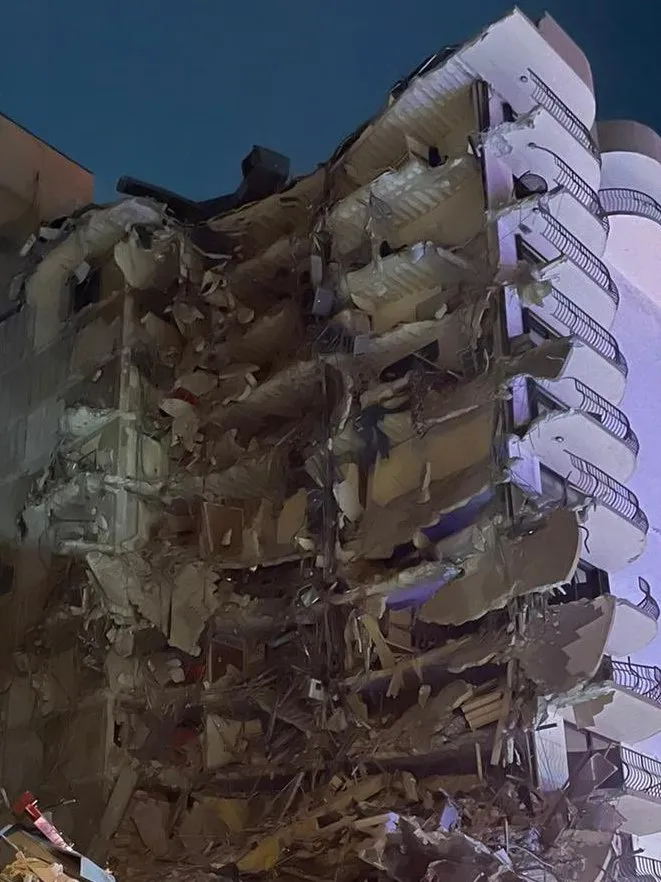
Photo: Miami-Dade Fire Rescue Department, Public domain, via Wikimedia Commons
That Big HOA Reserve Balance Looked Reassuring — Here's Why It Might Mean Almost Nothing
You did your homework. Before making an offer on that condo, you asked for the HOA financials. You saw the reserve fund balance — let's say it's $400,000 — and felt a quiet wave of relief. The association is funded. The building is taken care of. You're not walking into a financial mess.
Except you might be. Because that $400,000 figure, sitting there in a document looking solid and reassuring, tells you almost nothing without the one piece of information most buyers never think to request.
The Number That Actually Matters
Every responsible HOA periodically commissions something called a reserve study. It's an engineering and financial analysis that does two things: it inventories all the major common elements of the property — roofs, elevators, parking structures, pools, HVAC systems, plumbing — and estimates both their remaining useful life and the cost to eventually replace them. From there, the study calculates how much money the association should have in reserve right now to cover those future obligations without hitting owners with sudden, large charges.
The result of that study produces a number called the reserve funding percentage — essentially, what share of the recommended reserve balance the HOA actually has on hand. And this is the number that exposes the real picture.
A reserve fund sitting at $400,000 sounds healthy until you learn the study recommends $1.2 million for that property's profile. Now you're looking at a funding level of about 33% — which most reserve specialists would classify as dangerously underfunded. That $400,000 isn't a sign of financial health. It's a gap of $800,000 waiting to become someone's problem.
Why Buyers Miss This Every Time
The reserve balance is easy to find and easy to understand. It's a single number. The reserve study, by contrast, is a dense technical document that requires some literacy to interpret — and most buyers, already overwhelmed by the purchase process, don't know to ask for it.
Real estate agents often don't flag it either, partly because they're not required to and partly because a complicated conversation about HOA funding percentages can slow down a transaction. Sellers aren't likely to volunteer it if the news isn't good. And so the reserve balance gets treated as the story when it's really just the opening sentence.
There's also a timing problem. Reserve studies are typically done every three to five years. An association might have had a solid study done four years ago and done little to close the funding gap since. The balance might have grown slightly, but the building's systems have also aged — meaning the actual funding percentage may have gotten worse even as the dollar figure crept upward.
What Underfunding Actually Costs You
When an HOA's reserve fund can't cover a major repair or replacement, the association has a few options — none of them great for owners. They can take out a loan, which typically means higher monthly dues to service the debt. They can defer the repair, which usually makes the eventual problem worse and more expensive. Or they can issue a special assessment.
A special assessment is a one-time charge levied against every unit owner to cover a funding shortfall. These can range from a few hundred dollars to tens of thousands, depending on the scale of the repair and the number of units sharing the cost. In a building with aging infrastructure and an underfunded reserve, a special assessment isn't an unlikely scenario — it's a mathematical near-certainty.
The cruel part is that buyers often absorb this risk without knowing it. You close on your condo in October, and by March the board announces a $15,000 special assessment per unit for a roof replacement that the reserve fund can't fully cover. You owned the unit for five months. You had nothing to do with the years of underfunding that created the problem. But you're paying for it.
The Questions Worth Asking Before You Close
The good news is that this information is typically accessible — you just have to know what to look for and ask for it directly.
Start by requesting the most recent reserve study, not just the current financials. Ask specifically what the recommended reserve balance is and what percentage of that the association currently holds. A funding level above 70% is generally considered healthy; anything below 50% warrants serious scrutiny. Below 30% should be a significant red flag.
Also ask when the last reserve study was completed and whether the association has a formal plan for closing any identified funding gap. Some associations have a contribution schedule that steadily closes the shortfall over time — that's a responsible sign. Others have no plan at all and are hoping the problem resolves itself, which it won't.
If you're working with a real estate attorney — and in many states, you should be — ask them to review the HOA financials with the reserve study in hand, not just the balance sheet.
The Bigger Picture
HOA reserve funds are one of those areas where the real estate transaction process creates a false sense of security. Buyers are handed documents, they see a healthy-looking number, and they move on. The system doesn't naturally prompt the follow-up questions that would reveal whether that number is actually meaningful.
Clearing the story here is simple: the balance is just a starting point. The reserve study tells you what that balance should be. Without both, you're making a significant financial decision with half the information — and the half you're missing is usually the more important one.