Your Agent's 'Hot Market' Data Is Already Cold: The Lag That's Misleading Buyers
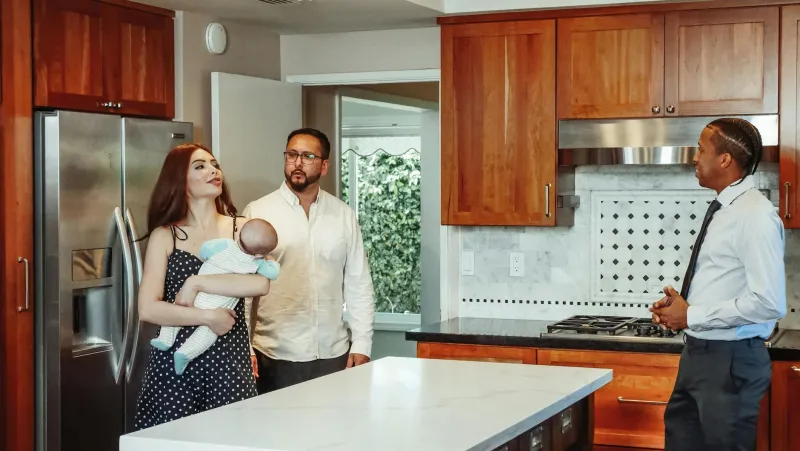
Your real estate agent pulls up recent sales data on their tablet, points to comparable properties, and confidently declares: "Based on these comps, your offer needs to be at least $50,000 over asking." The presentation feels authoritative, backed by hard numbers and professional expertise.
But here's what they're not telling you: most of that "current" market data reflects decisions buyers made two to three months ago, not what's happening in today's market.
The Hidden Timeline Behind Market Data
Real estate operates on a delayed information system that would seem absurd in almost any other industry. When agents cite "comparable sales"—the foundation of all pricing decisions—they're typically looking at homes that:
- Went under contract 30-60 days ago
- Actually sold 45-90 days ago
- May have been listed 60-120 days ago
This means the "current" market data driving today's pricing recommendations often reflects buyer sentiment from an entirely different market environment.
Consider what can change in 60-90 days: mortgage rates can shift by a full percentage point, major employers can announce layoffs or expansions, seasonal buying patterns can reverse, and national economic news can completely alter buyer confidence.
When Stale Data Creates Real Problems
This data lag becomes particularly problematic during market transitions. In rapidly appreciating markets, agents using two-month-old comps may be underpricing listings, costing sellers money. In cooling markets, the same lag leads to overpricing that leaves homes sitting unsold.
The spring 2022 market illustrated this perfectly. Agents citing February and March sales data were advising April buyers to compete aggressively, just as rising mortgage rates were beginning to reduce buyer demand. Many buyers who followed this stale guidance overpaid for homes in a market that was already shifting beneath their feet.
Similarly, in late 2008, agents were still citing summer sales comps well into the fall, missing the early signals of the dramatic price corrections that followed.
The Confidence Game
Real estate agents present market analysis with tremendous confidence because their tools—MLS databases, comparative market analyses, and pricing algorithms—generate precise-looking numbers. A CMA might declare that your home is worth $847,500 based on mathematical analysis of recent sales.
This precision is misleading. The data behind these calculations is inherently backward-looking, and the algorithms can't account for rapidly changing market sentiment, pending economic news, or seasonal shifts that haven't yet appeared in closed sales data.
Yet agents rarely acknowledge these limitations when advising clients. The business model rewards confident recommendations over uncertain analysis, even when uncertainty would be more honest.
What Forward-Looking Indicators Actually Tell Us
Smart market participants look beyond closed sales to more current indicators:
Active listing behavior: How long are new listings staying on the market compared to last month? Are price reductions becoming more common?
Pending sales ratios: What percentage of listed homes are going under contract? This metric updates weekly rather than monthly.
Showing activity: Are buyer agents scheduling fewer showings per listing? This data is available almost immediately.
Mortgage application trends: Weekly mortgage application data from the Mortgage Bankers Association provides real-time insight into buyer demand.
 Photo: Mortgage Bankers Association, via vectorseek.com
Days on market trends: Are homes selling faster or slower than they were 30 days ago?
These indicators often signal market shifts weeks before they appear in closed sales data.
The Questions Smart Buyers Ask
Instead of accepting comp-based pricing recommendations at face value, informed buyers dig deeper:
- "How recent are these comparable sales? When did these homes actually go under contract?"
- "What's happening with listings that came on the market in the past two weeks?"
- "Are you seeing any changes in buyer behavior since these comps sold?"
- "What do current mortgage rate trends suggest about buyer demand?"
These questions force agents to acknowledge the limitations of their data and consider more current market signals.
The Real Expert Move
The most successful real estate professionals supplement historical data with current market observation. They track showing feedback in real time, monitor how quickly new listings generate offers, and pay attention to broader economic indicators that might affect buyer behavior.
They also communicate uncertainty honestly. A good agent might say: "Based on recent sales, this price range makes sense, but I'm seeing some early signs that buyer demand might be softening. Let's price strategically and be prepared to adjust if the market feedback suggests we're off."
Making Decisions in Real Time
Real estate will always involve some level of information lag—homes can't be bought and sold as quickly as stocks. But buyers and sellers can protect themselves by understanding these limitations and insisting on more current market intelligence.
The next time an agent presents market data with absolute confidence, remember: they're describing where the market was, not necessarily where it's going. In real estate, yesterday's data might already be ancient history.